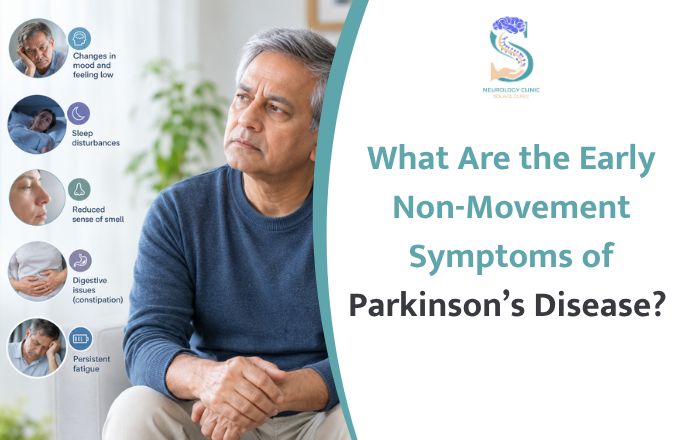
What Are the Early Non-Movement Symptoms of Parkinson’s Disease?
Recent Posts
When most people think of Parkinson’s disease, they picture a shaking hand or a slow, shuffling walk. But it can also cause changes that have nothing to do with movement, sometimes years before any tremor.
These non-movement symptoms of Parkinson’s include things like a weaker sense of smell, restless dreams, constipation and low mood. They are also very common in people who do not have Parkinson’s at all. Here is what you should know.
What Are the Non-Movement Symptoms of Parkinson’s?
Non-movement symptoms, also called non-motor symptoms, are changes in smell, sleep, digestion, mood, energy and blood pressure control that can occur in Parkinson’s disease. Some can begin before the typical movement problems appear.
Parkinson’s is mainly known for the loss of brain cells that make dopamine, which affects movement. However, the condition can also involve other nerve pathways, including those that control the gut, the sense of smell, sleep and automatic body functions such as blood pressure.
Early Non-Movement Symptoms to Know About
None of the symptoms below confirms Parkinson’s on its own. Each one has many possible causes, and most people who have them will never develop the condition.
1. Reduced Sense of Smell
A gradual loss of smell is one of the more recognised early features. You may notice that food tastes flat, or that strong smells like agarbatti, coffee or cooking spices seem faint.
Many people do not realise it is happening because the change is slow. Colds, sinus problems, nasal allergies, smoking, viral infections and normal ageing can all reduce smell too.
2. Acting Out Dreams During Sleep
Normally, the body stays still during dreaming sleep. In REM sleep behaviour disorder, this natural pause in muscle activity does not work properly. A person may shout, talk, punch or kick while dreaming, and sometimes fall out of bed.
Often it is the spouse who notices it first. This sleep disorder has a recognised link with Parkinson’s, but it can also be related to certain medicines and other sleep problems. It needs proper assessment. Meanwhile, keep the bedroom safe.
3. Constipation That Lasts
Constipation that continues for months or years can be an early non-motor symptom, because Parkinson’s may affect the nerves of the gut.
Constipation is extremely common. Low fibre, not drinking enough water, less physical activity, thyroid problems and many medicines are far more frequent causes.
4. Mood Changes
Low mood, anxiety or a loss of interest in things you used to enjoy can sometimes be part of early Parkinson’s.
Depression and anxiety are common conditions in their own right. Life stress, sleep problems and other health issues can cause them. They deserve attention whatever the cause.
5. Unusual Tiredness
Some people feel a deep, ongoing tiredness that does not match their activity level. In Parkinson’s, fatigue can appear early and is not always relieved by rest.
Fatigue also has many everyday causes, including anaemia, thyroid problems, diabetes, poor sleep, vitamin deficiencies and depression.
6. Dizziness When Standing Up
Feeling light headed or dizzy when you stand up quickly may be due to a drop in blood pressure on standing. Parkinson’s can affect the nerves that adjust blood pressure when you change position.
This kind of dizziness is also commonly caused by dehydration, blood pressure tablets, diabetes or heart conditions. If you feel faint, sit or lie down straight away.
7. Other Changes
Less commonly, people notice:
- Needing to pass urine urgently or often at night
- Excessive sweating
- Daytime sleepiness
- Unexplained aches, often in the shoulder
- Thinking feeling slower than usual
Do These Symptoms Mean You Have Parkinson’s?
No. Having one or even a few of these symptoms does not mean you have Parkinson’s disease. They are common in the general population, especially with age.
A neurologist will consider how long the symptoms have been present, whether they are getting worse, and whether there are any subtle movement changes such as stiffness, slowness or a slight tremor. Parkinson’s is diagnosed mainly on the movement signs.
You can read more about the movement related early signs of Parkinson’s in our earlier article.
How Do Doctors Assess These Symptoms?
There is no single blood test that confirms Parkinson’s. Assessment usually begins with a detailed conversation and examination.
- A full history of your symptoms, sleep, bowel habits, mood and medicines
- A neurological examination to look for early movement changes
- Blood pressure checks while lying down and standing
- Blood tests to rule out other causes, such as thyroid problems or vitamin deficiencies
- Brain imaging or a sleep study in selected cases
The tests you need depend on your symptoms and examination findings.
When Should You See a Neurologist?
Consider booking a consultation if:
- Your partner notices you acting out dreams
- You have lost your sense of smell without a clear reason
- Several of these changes have appeared together
- You also notice stiffness, slowness, a tremor or smaller handwriting
Seek emergency care for sudden weakness on one side, a drooping face or slurred speech, as these may be signs of a stroke. Fainting, falls with injury or thoughts of self harm also need urgent help.
Can These Symptoms Be Managed?
Yes. Many non-movement symptoms can be eased, whether or not Parkinson’s is the cause. Constipation often responds to fibre, fluids and activity. Mood changes can be helped with counselling and, if needed, medicine. Standing up slowly and drinking enough water may reduce dizziness. Regular exercise supports sleep, mood and energy.
If Parkinson’s is diagnosed, a neurologist can plan Parkinson’s disease care for both movement and non-movement symptoms.
Frequently Asked Questions
1. Can Parkinson’s start without a tremor?
Yes. Not everyone with Parkinson’s has a tremor, and some people first notice changes like slowness, stiffness or non-movement symptoms. That is why a neurologist looks at the full picture rather than focusing on shaking alone. Early changes are often subtle, and family members may notice them first.
2. How early can non-motor symptoms appear?
Some, such as loss of smell, constipation and REM sleep behaviour disorder, can appear years before movement symptoms. However, the timing varies a great deal, and many people with these symptoms never develop Parkinson’s. If you are concerned, a neurologist can review your symptoms.
3. Is loss of smell always a sign of Parkinson’s?
No. Smell loss is far more often caused by colds, sinus problems, allergies, viral infections, smoking or ageing. It is worth discussing with a doctor if it is persistent and unexplained, especially if other changes are present. A nose and sinus check is often a sensible first step.
4. Should I get tested for Parkinson’s if I have constipation?
Constipation alone is not a reason to suspect Parkinson’s. It is very common and usually linked to diet, fluids, activity or medicines. See a doctor if it is long lasting, severe or comes with other symptoms such as weight loss or blood in the stool.
5. Can stress or depression cause these symptoms?
Yes. Stress and depression can cause tiredness, poor sleep, low energy and even digestive changes. This overlap is one reason self diagnosis is unreliable. A proper medical assessment helps find the actual cause and the right treatment. Treating low mood often eases the other symptoms too.
Consult Dr. Sumit Kharat in Wanwadi, Pune
If you or a family member have noticed some of these changes, an assessment can help. Dr. Sumit Kharat, Consultant Neurologist at Solace Neuro Clinic, has 9+ years of clinical experience. He holds an MBBS, MD (General Medicine) and DM (Neurology), and sees patients with Parkinson’s disease and other neurological conditions in Wanwadi, Pune.
Solace Neuro Clinic
First Floor, Jambhulkar Chowk, Aastha Seagull, 103, Wanwadi, Pune, Maharashtra 411040
Phone: 89562 56057
Call to book an appointment, or visit our contact page. Please bring a list of your symptoms and medicines.