
solaceneuroclinic.com

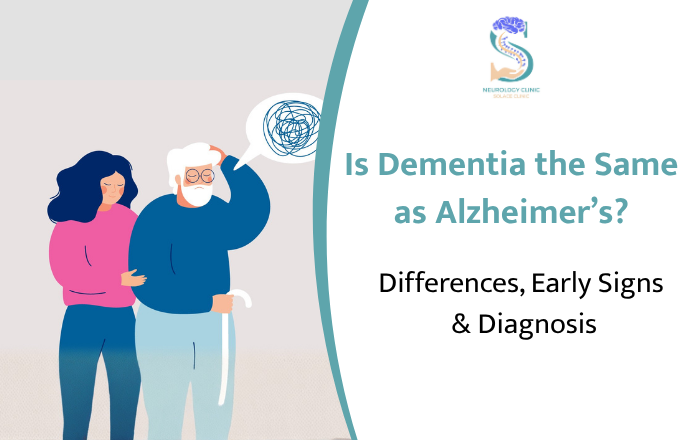
Is Dementia the Same as Alzheimer’s? Differences, Early Signs & Diagnosis

If you’ve ever used the words “dementia” and “Alzheimer’s” interchangeably, you’re not alone. Most people do. But here’s the truth — dementia and Alzheimer’s are not the same thing, and understanding the difference could be one of the most important things you do for yourself or someone you love.

Maybe you’ve noticed a parent repeating the same question twice in one conversation. Or perhaps your spouse has been forgetting familiar names more often lately. That quiet worry in the back of your mind — is this normal, or is something wrong? — deserves a real answer.

In India, over 5.3 million people are currently living with dementia, and that number is expected to double by 2050. Yet many families wait years before getting a diagnosis, simply because they didn’t know where to start. This blog will change that.

What Is Dementia?

Dementia is not a single disease. It is an umbrella term — a way of describing a group of symptoms that affect memory, thinking, behaviour, and the ability to handle everyday tasks.

Think of it like “fever.” Fever isn’t a disease on its own; it’s a sign that something else is happening inside the body. Dementia works the same way. It tells you something is wrong with the brain, but not necessarily what is causing it.

For a doctor to diagnose dementia, a person typically needs to show:

  • Memory loss that disrupts daily life
  • Difficulty thinking clearly or solving simple problems
  • Confusion about time, place, or people
  • Changes in mood or personality

Importantly — dementia is not a normal part of ageing. Forgetting where you left your keys once in a while is normal. Forgetting what keys are for is not.

What Is Alzheimer’s Disease?

Alzheimer’s disease is the most common cause of dementia. It accounts for roughly 60–80% of all dementia cases worldwide. It is a specific brain disease where abnormal proteins called amyloid plaques and tau tangles — build up in the brain and slowly destroy brain cells over time.

The simplest way to remember the difference:

All Alzheimer’s is dementia — but not all dementia is Alzheimer’s.

Alzheimer’s always leads to dementia symptoms. But dementia can also be caused by many other conditions, including vascular dementia (caused by reduced blood flow to the brain, often after a stroke), Lewy body dementia, frontotemporal dementia, or even reversible conditions like vitamin B12 deficiency and thyroid problems.

That last point is worth emphasising some forms of dementia are reversible if caught early enough. This is one of the strongest reasons to see a neurologist as soon as symptoms appear, rather than waiting.

Dementia vs Alzheimer’s: Key Differences at a Glance

                          Dementia                                 Alzheimer’s Disease

What it is          A group of symptoms              A specific brain disease

Caused by        Many possible conditions        Abnormal protein build-up

Reversible?       Sometimes                               No

First signs         Varies by type                          Usually memory loss

Treatment        Depends on the cause             Medications can slow progression

7 Early Warning Signs You Should Not Ignore

Both dementia and Alzheimer’s tend to develop slowly. Symptoms are easy to dismiss in the beginning. Here are the signs that genuinely warrant attention:
1. Memory loss that keeps happening — Forgetting recent conversations, appointments, or names — and not recalling them even later — is one of the earliest signs of Alzheimer’s disease.

2. Difficulty with familiar tasks — Struggling to cook a recipe they’ve made for years, or losing track of monthly bills that were once managed easily.

3. Confusion about time or place — Regularly losing track of dates, seasons, or forgetting where they are and how they got there.

4. Trouble finding words — Stopping mid-sentence without knowing how to continue. Repeating the same story without realising it.

5. Poor judgement — Making unusual financial decisions, or not recognising when they need medical help.

6. Withdrawing from people and activities — Pulling away from family, friends, or hobbies not by choice, but because they’ve become confusing or overwhelming.

7. Mood and personality changes — Becoming unusually suspicious, anxious, or irritable — especially in unfamiliar situations.
If you’re noticing several of these signs together, or a clear change from how this person used to be, it’s time to speak with a neurologist.

How Is Dementia Diagnosed?

There is no single test for dementia or Alzheimer’s disease. A proper diagnosis involves several steps:

  • Clinical history — A neurologist will ask detailed questions about when symptoms started and how they’ve changed over time.
  • Cognitive tests — Standardised assessments like the MMSE or MoCA test memory, attention, language, and reasoning.
  • Blood tests — These help rule out reversible causes like thyroid issues, vitamin deficiencies, or infections.
  • Brain imaging — MRI or CT scans can show structural changes in the brain. PET scans can detect amyloid plaques associated with Alzheimer’s disease.

Early diagnosis genuinely matters. When dementia or Alzheimer’s is identified early, there is more time to explore treatment options, make important decisions, and in some cases, treat a reversible cause entirely.

FAQ

Q1: Can a young person get Alzheimer’s or dementia?
Yes. Early-onset Alzheimer’s disease can affect people in their 40s and 50s. If you notice symptoms in a younger person, don’t dismiss them.

Q2: Is all memory loss a sign of dementia?
No. Occasional forgetfulness is normal. Dementia-related memory loss is progressive, worsens over time, and affects daily life.

Q3: Can dementia be reversed?
Some causes of cognitive decline — like vitamin deficiencies or thyroid problems — are reversible. Alzheimer’s disease itself cannot be reversed, but its progression can be slowed with the right treatment.

Q4: When should I see a neurologist?
If you notice three or more of the early warning signs listed above, or a clear change in memory or behaviour over several months, see a neurologist promptly. Don’t wait for symptoms to become severe.

Consult Dr. Sumit B. Kharat — Neurologist in Wanwadi, Pune

If you’re worried about memory changes in yourself or a loved one, speaking with the right doctor makes all the difference.

Dr. Sumit Kharat is a trusted Neurologist in Wanwadi, we serve patients from Salunkhe Vihar, NIBM, Undri, Lullanagar, Kondhwa, and BT Kawade Road, specializing in diagnosing and treating neurological conditions at Solace Neuro Clinic. From dementia and Alzheimer’s disease to stroke, epilepsy, and memory disorders, Dr. Kharat is committed to giving every patient clear answers and the right care.

Your brain health matters. Don’t put it off.

📍 Solace Neuro Clinic, Wanwadi, Pune
📞 Book your consultation today.

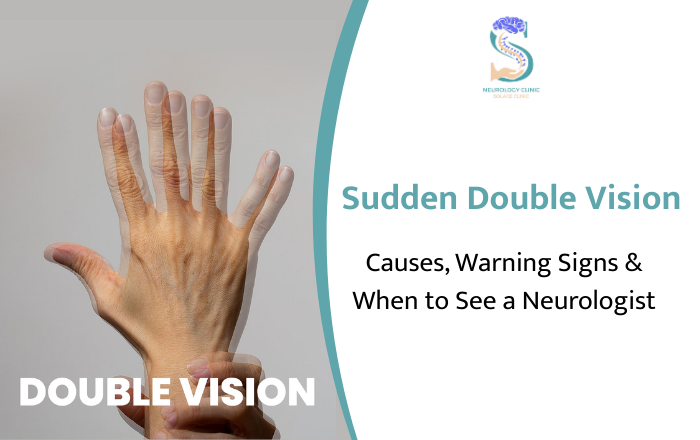
Sudden Double Vision: Causes, Warning Signs & When to See a Neurologist

Sudden Double Vision: Causes, Warning Signs & When to See a Neurologist

Sudden Double Vision: Causes, Warning Signs & When to See a Neurologist

Have you ever looked up from your phone and suddenly seen two of everything? That disorienting moment where one image splits into two — it’s scary, confusing, and hard to shake off. If you’ve experienced sudden double vision, you’re not alone — and more importantly, you should not ignore it.

Sudden double vision (medically known as diplopia) is not just an eye problem. It can be your body’s way of signalling something serious happening in your brain or nervous system. This article breaks down everything you need to know — in plain, simple language.


What Is Sudden Double Vision?

Double vision means seeing two images of a single object at the same time. They may appear side by side, stacked, or at an angle. This is different from blurry vision.

There are two types:

  • Monocular diplopia — happens in one eye, even when the other is closed. Usually an eye-level problem.
  • Binocular diplopia — happens when both eyes are open and disappears when you close one eye. This type is more concerning and is often linked to neurological causes.

7 Common Causes of Sudden Double Vision

1. Stroke or Mini-Stroke (TIA)

This is the most urgent cause. A sudden double vision that appears within seconds — especially with facial drooping, arm weakness, or speech difficulty — can signal a stroke. Around 800,000 strokes occur every year in the US alone, and vision changes are among the earliest signs.

2. Brain Aneurysm

A bulging blood vessel pressing on a nerve near the eye can cause sudden double vision, often with a severe headache and a drooping eyelid. This is a medical emergency.

3. Cranial Nerve Palsy

The nerves controlling eye movement (3rd, 4th, and 6th cranial nerves) can be damaged by diabetes, high blood pressure, or trauma — causing one eye to drift and producing double vision.

4. Multiple Sclerosis (MS)

MS attacks the protective covering of nerve fibres. Up to 33% of MS patients experience double vision at some point, often as one of the first symptoms.

5. Myasthenia Gravis

This autoimmune condition weakens muscles — the eye muscles are usually hit first. Double vision that worsens with fatigue and gets better after rest is a classic sign.

6. Head Injury or Concussion

Even a mild knock to the head can disrupt the brain’s eye-movement system, leading to double vision after head trauma.

7. Thyroid Eye Disease

An overactive thyroid can cause eye muscles to swell, pulling the eyes out of alignment and causing diplopia — often worse in certain directions of gaze.


5 Warning Signs That Make Double Vision an Emergency

Some symptoms alongside sudden double vision mean you need to go to the emergency room immediately:

  1. 🚨 Sudden onset with no clear reason
  2. 🚨 Severe headache — the worst of your life
  3. 🚨 Facial drooping, arm weakness, or slurred speech
  4. 🚨 Drooping of one eyelid
  5. 🚨 Double vision that appeared after a head injury

Use the FAST rule — Face drooping, Arm weakness, Speech problems, Time to call for help.


When Should You See a Neurologist for Double Vision?

See a neurologist if your double vision:

  • Came on suddenly with no obvious trigger
  • Has happened more than once
  • Lasts longer than a few minutes
  • Comes with headache, dizziness, or weakness
  • Is getting worse over time

Temporary double vision from tiredness may seem harmless — but repeated episodes are never normal. A neurologist can find the root cause and stop it from becoming something bigger.


How Is Sudden Double Vision Diagnosed?

A neurologist will look at the full picture — not just your eyes. Diagnosis typically involves:

  • Eye movement exam — checking how each eye moves in all directions
  • MRI or CT brain scan — to rule out stroke, MS, tumours, or nerve compression
  • Blood tests — for thyroid function, blood sugar, and autoimmune markers
  • Specialised tests — such as the Tensilon test if myasthenia gravis is suspected

Treatment Depends on the Cause

The right treatment for diplopia depends entirely on what is causing it:

  • Stroke → Emergency treatment to restore blood flow
  • MS → Steroids for flare-ups; long-term medication to slow progression
  • Myasthenia Gravis → Medication to improve nerve-muscle signalling
  • Diabetic nerve palsy → Blood sugar control; often resolves in 2–3 months
  • Thyroid eye disease → Treating the thyroid; surgery in severe cases
  • Prism glasses → Used in many cases to help reduce double images while the cause is being treated

Early diagnosis leads to faster recovery. The longer you wait, the harder some conditions become to treat.


FAQ: Quick Answers on Double Vision

Q: Can stress cause double vision?

Stress can cause eye strain — but true double vision (two separate images) is not a stress symptom. Get it checked.

Q: Will double vision go away on its own?

Some cases do resolve — but only after a proper diagnosis. Never wait without seeing a doctor first.

Q: Is double vision more common after 50?

Yes. In adults over 50, sudden double vision is often linked to diabetes, high blood pressure, or stroke risk. Always see a neurologist promptly.

Q: Can children get sudden double vision?

Yes. and it’s always urgent in children. It can indicate a brain tumour or viral nerve condition.


See a Neurologist in Wanwadi, Pune — Dr. Sumit Kharat at Solace Neuro Clinic

If you or someone you love is dealing with sudden double vision, diplopia, or any unexplained vision change — do not put it off.

Dr. Sumit Kharat, Neurologist at Solace Neuro Clinic, Wanwadi, Pune, evaluates and treats conditions causing double vision — from stroke and MS to nerve palsies and myasthenia gravis. With a patient-first approach and thorough diagnostic care, Dr. Kharat helps you get clear answers and the right treatment — without the wait and worry.

📍 Solace Neuro Clinic, Wanwadi, Pune

👨‍⚕️ Dr. Sumit Kharat — Neurologist

📅 Book your consultation today. Your vision and brain health cannot wait.

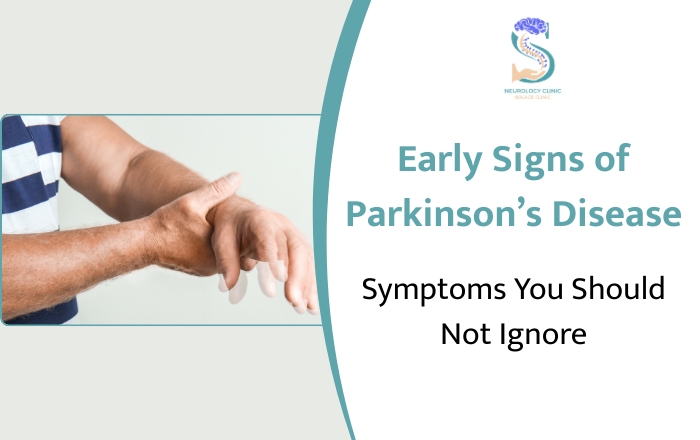
Early Signs of Parkinson’s Disease: 10 Symptoms You Should Never Ignore

Early Signs of Parkinson’s Disease: 10 Symptoms You Should Never Ignore

Early Signs of Parkinson's Disease: 10 Symptoms You Should Never Ignore

Imagine waking up one morning and noticing your hand trembling slightly as you reach for your coffee cup. Or perhaps your handwriting has become smaller, and you’ve been feeling unusually tired for weeks. These small changes might seem unimportant, but they could be early signs of Parkinson’s disease.

Parkinson’s disease affects over 10 million people worldwide. The challenge is that many people dismiss the initial symptoms as normal aging or stress. However, recognizing these warning signs early can make a significant difference in managing the condition and maintaining your quality of life.

In this article, we’ll explore the 10 early warning signs of Parkinson’s disease that you should never ignore, helping you understand when it’s time to consult a neurologist.

What Is Parkinson’s Disease?

Parkinson’s disease is a neurological condition that affects movement. It occurs when brain cells that produce dopamine a chemical messenger controlling movement begin to break down. While it commonly affects people over 60, younger adults can also develop this condition.

The key to managing Parkinson’s lies in early detection. When caught early, treatments work better, and you have more time to adjust your lifestyle accordingly.

10 Early Signs of Parkinson’s Disease You Shouldn’t Ignore

1. Tremors in Your Hands or Fingers

One of the most recognizable symptoms of Parkinson’s disease is trembling in your hands, fingers, or limbs—especially when you’re relaxed. This “resting tremor” often starts in one hand and may look like you’re rolling a pill between your thumb and finger. If you notice your hand shaking while watching TV or sitting quietly, it’s worth paying attention to.

2. Small, Cramped Handwriting

Have you noticed your handwriting getting smaller? This condition, called micrographia, is an early sign of Parkinson’s disease that many people overlook. If the letters in your writing are becoming noticeably tinier and crowding together, don’t brush it off.

3. Loss of Smell

Trouble smelling foods like bananas, coffee, or pickles can appear 5-10 years before other Parkinson’s disease symptoms. Up to 90% of people with Parkinson’s experience reduced sense of smell. If familiar scents seem weaker or disappear, talk to your doctor.

4. Trouble Sleeping and Sudden Movements

Do you act out your dreams by kicking, punching, or thrashing during sleep? This condition, called REM sleep behavior disorder, is a common early warning sign of Parkinson’s. Your partner might notice you talking or moving violently while asleep.

5. Muscle Stiffness or Rigidity

If your muscles feel tight and don’t relax, even after stretching, this could indicate Parkinson’s. You might notice reduced arm swing when walking, difficulty getting out of chairs, or a “frozen” feeling in your shoulders or legs. This stiffness is different from normal muscle soreness after exercise.

6. Changes in Walking and Posture

People with early Parkinson’s symptoms often develop a shuffling walk instead of their normal stride. You might feel like your feet are stuck to the floor, or you may develop a stooped, hunched posture. Balance problems and difficulty turning are also common signs.

7. Constipation and Digestive Problems

Chronic constipation is one of the earliest non-motor symptoms of Parkinson’s disease, sometimes appearing years before diagnosis. If you’re experiencing ongoing digestive issues without any clear cause, it could be related to Parkinson’s affecting your digestive system.

8. Soft, Quiet Voice

Has anyone told you they can’t hear you clearly? A softer, quieter voice called hypophonia is a common symptom of Parkinson’s. Your voice might sound monotone, hoarse, or breathy. People may frequently ask you to speak up or repeat yourself.

9. Lack of Facial Expression

If your face appears serious, sad, or mask-like even when you’re not upset, this could be a sign of Parkinson’s disease. You might blink less frequently, and others may think you’re angry or depressed when you’re actually feeling fine.

10. Unexplained Fatigue

Feeling constantly tired despite getting enough rest is a common but overlooked early sign of Parkinson’s. This isn’t normal tiredness it’s a deep exhaustion that doesn’t improve with sleep and can make simple tasks feel overwhelming.

Other Symptoms to Watch For

Beyond the main 10 signs, Parkinson’s disease can cause:

  • Depression and anxiety
  • Difficulty concentrating
  • Dizziness when standing up
  • Excessive sweating
  • Urinary problems

When Should You See a Neurologist?

If you’re experiencing two or more of these symptoms of Parkinson’s disease, especially if they persist for several weeks, schedule an appointment with a neurologist. Don’t wait for symptoms to worsen.

Remember, these symptoms don’t always mean you have Parkinson’s—they can be caused by other conditions. Only a qualified doctor can provide an accurate diagnosis through physical examination and medical history review.

How Is Parkinson’s Diagnosed?

There’s no single blood test for Parkinson’s disease. Doctors diagnose it based on:

  • Detailed medical history
  • Physical and neurological examination
  • Assessment of movement and coordination
  • Brain imaging when necessary

The earlier you get checked, the sooner you can start treatment.

Treatment Options Give You Hope

While there’s no cure for Parkinson’s disease, several treatments can help manage symptoms:

  • Medications like Levodopa help replace lost dopamine
  • Physical therapy improves movement and balance
  • Exercise programs keep muscles strong and flexible
  • Speech therapy helps with voice and swallowing issues
  • Lifestyle changes including diet and stress management

Starting treatment early makes a real difference in how well these therapies work.

Your Next Step

Recognizing the early signs of Parkinson’s disease isn’t about fear it’s about taking control of your health. If you’ve noticed any of these symptoms in yourself or a loved one, don’t ignore them.

Take action today. The sooner you consult with a neurologist who specializes in movement disorders, the sooner you can access treatments that help you maintain your independence and quality of life.

Get Parkinson’s Care in Wanwadi, Pune

If you’re experiencing any warning signs of Parkinson’s disease, reach out to Solace Neuro Clinic in Wanwadi, led by Dr. Sumit Kharat, an experienced neurologist specializing in Parkinson’s disease treatment.

Dr. Kharat provides:

  • Accurate diagnosis through thorough neurological assessment
  • Treatment plans tailored to your specific needs
  • Compassionate care focused on improving your daily life
  • Support and guidance for you and your family

Don’t wait for symptoms to get worse. Early diagnosis and treatment can help you live better with Parkinson’s.

📞 Contact Solace Neuro Clinic today
📍 Location: Wanwadi
🩺 Specialist: Dr. Sumit Kharat – Neurologist for Parkinson’s disease treatment

Your health matters. Take the first step toward better management of your symptoms today.

Is Dementia the Same as Alzheimer's? Differences, Early Signs & Diagnosis

Is Dementia the Same as Alzheimer’s? Differences, Early Signs & Diagnosis

If you’ve ever used the words “dementia” and “Alzheimer’s” interchangeably, you’re not alone. Most people do. But here’s the truth — dementia and Alzheimer’s are not the same thing, and understanding the difference could be one of the most important things you do for yourself or someone you love.

Maybe you’ve noticed a parent repeating the same question twice in one conversation. Or perhaps your spouse has been forgetting familiar names more often lately. That quiet worry in the back of your mind — is this normal, or is something wrong? — deserves a real answer.

In India, over 5.3 million people are currently living with dementia, and that number is expected to double by 2050. Yet many families wait years before getting a diagnosis, simply because they didn’t know where to start. This blog will change that.

What Is Dementia?

Dementia is not a single disease. It is an umbrella term — a way of describing a group of symptoms that affect memory, thinking, behaviour, and the ability to handle everyday tasks.

Think of it like “fever.” Fever isn’t a disease on its own; it’s a sign that something else is happening inside the body. Dementia works the same way. It tells you something is wrong with the brain, but not necessarily what is causing it.

For a doctor to diagnose dementia, a person typically needs to show:

  • Memory loss that disrupts daily life
  • Difficulty thinking clearly or solving simple problems
  • Confusion about time, place, or people
  • Changes in mood or personality

Importantly — dementia is not a normal part of ageing. Forgetting where you left your keys once in a while is normal. Forgetting what keys are for is not.

What Is Alzheimer’s Disease?

Alzheimer’s disease is the most common cause of dementia. It accounts for roughly 60–80% of all dementia cases worldwide. It is a specific brain disease where abnormal proteins called amyloid plaques and tau tangles — build up in the brain and slowly destroy brain cells over time.

The simplest way to remember the difference:

All Alzheimer’s is dementia — but not all dementia is Alzheimer’s.

Alzheimer’s always leads to dementia symptoms. But dementia can also be caused by many other conditions, including vascular dementia (caused by reduced blood flow to the brain, often after a stroke), Lewy body dementia, frontotemporal dementia, or even reversible conditions like vitamin B12 deficiency and thyroid problems.

That last point is worth emphasising some forms of dementia are reversible if caught early enough. This is one of the strongest reasons to see a neurologist as soon as symptoms appear, rather than waiting.

Dementia vs Alzheimer’s: Key Differences at a Glance

                          Dementia                                 Alzheimer’s Disease

What it is          A group of symptoms              A specific brain disease

Caused by        Many possible conditions        Abnormal protein build-up

Reversible?       Sometimes                               No

First signs         Varies by type                          Usually memory loss

Treatment        Depends on the cause             Medications can slow progression

7 Early Warning Signs You Should Not Ignore

Both dementia and Alzheimer’s tend to develop slowly. Symptoms are easy to dismiss in the beginning. Here are the signs that genuinely warrant attention:
1. Memory loss that keeps happening — Forgetting recent conversations, appointments, or names — and not recalling them even later — is one of the earliest signs of Alzheimer’s disease.

2. Difficulty with familiar tasks — Struggling to cook a recipe they’ve made for years, or losing track of monthly bills that were once managed easily.

3. Confusion about time or place — Regularly losing track of dates, seasons, or forgetting where they are and how they got there.

4. Trouble finding words — Stopping mid-sentence without knowing how to continue. Repeating the same story without realising it.

5. Poor judgement — Making unusual financial decisions, or not recognising when they need medical help.

6. Withdrawing from people and activities — Pulling away from family, friends, or hobbies not by choice, but because they’ve become confusing or overwhelming.

7. Mood and personality changes — Becoming unusually suspicious, anxious, or irritable — especially in unfamiliar situations.
If you’re noticing several of these signs together, or a clear change from how this person used to be, it’s time to speak with a neurologist.

How Is Dementia Diagnosed?

There is no single test for dementia or Alzheimer’s disease. A proper diagnosis involves several steps:

  • Clinical history — A neurologist will ask detailed questions about when symptoms started and how they’ve changed over time.
  • Cognitive tests — Standardised assessments like the MMSE or MoCA test memory, attention, language, and reasoning.
  • Blood tests — These help rule out reversible causes like thyroid issues, vitamin deficiencies, or infections.
  • Brain imaging — MRI or CT scans can show structural changes in the brain. PET scans can detect amyloid plaques associated with Alzheimer’s disease.

Early diagnosis genuinely matters. When dementia or Alzheimer’s is identified early, there is more time to explore treatment options, make important decisions, and in some cases, treat a reversible cause entirely.

FAQ

Q1: Can a young person get Alzheimer’s or dementia?
Yes. Early-onset Alzheimer’s disease can affect people in their 40s and 50s. If you notice symptoms in a younger person, don’t dismiss them.

Q2: Is all memory loss a sign of dementia?
No. Occasional forgetfulness is normal. Dementia-related memory loss is progressive, worsens over time, and affects daily life.

Q3: Can dementia be reversed?
Some causes of cognitive decline — like vitamin deficiencies or thyroid problems — are reversible. Alzheimer’s disease itself cannot be reversed, but its progression can be slowed with the right treatment.

Q4: When should I see a neurologist?
If you notice three or more of the early warning signs listed above, or a clear change in memory or behaviour over several months, see a neurologist promptly. Don’t wait for symptoms to become severe.

Consult Dr. Sumit B. Kharat — Neurologist in Wanwadi, Pune

If you’re worried about memory changes in yourself or a loved one, speaking with the right doctor makes all the difference.

Dr. Sumit Kharat is a trusted Neurologist in Wanwadi, we serve patients from Salunkhe Vihar, NIBM, Undri, Lullanagar, Kondhwa, and BT Kawade Road, specializing in diagnosing and treating neurological conditions at Solace Neuro Clinic. From dementia and Alzheimer’s disease to stroke, epilepsy, and memory disorders, Dr. Kharat is committed to giving every patient clear answers and the right care.

Your brain health matters. Don’t put it off.

📍 Solace Neuro Clinic, Wanwadi, Pune
📞 Book your consultation today.