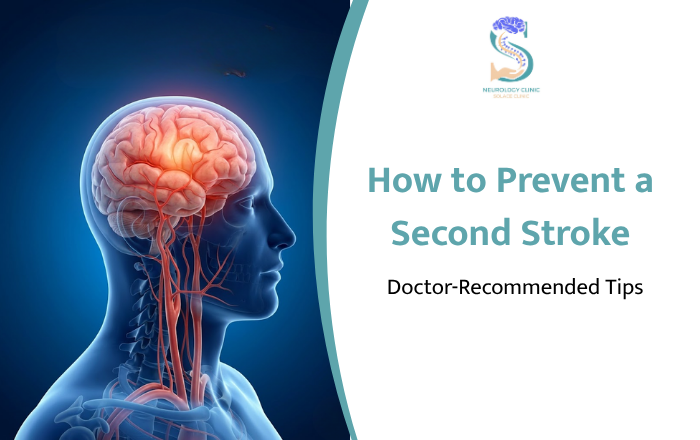
How to Prevent a Second Stroke: Doctor-Recommended Tips (2026 Guide)
Recent Posts
Why Second Stroke Prevention Is a Medical Emergency in Itself
A stroke survivor’s risk of having another stroke is significantly higher than the general population’s studies show that roughly 1 in 4 stroke survivors will experience a recurrent stroke within 5 years, with the highest risk window being the first 90 days after the initial event.
The critical insight: a second stroke is often more severe and more disabling than the first. But here’s what neurologists consistently emphasize up to 80% of recurrent strokes are preventable with the right medical strategy and lifestyle adherence.
This blog breaks down exactly what that strategy looks like in 2026.
The 6 Core Pillars of Secondary Stroke Prevention
1. Aggressive Blood Pressure Control
High blood pressure (hypertension) is the #1 modifiable risk factor for recurrent stroke.
Target: Keep systolic BP below 130 mmHg, per the American Heart Association’s 2024 updated guidelines.
Actionable Framework:
- Monitor BP at home twice daily (morning + evening)
- Use a validated cuff (e.g., Omron Platinum series)
- Work with your neurologist to titrate medications — ACE inhibitors or ARBs are commonly first-line
Real Example: A 58-year-old Pune patient who had a left-hemisphere ischemic stroke in 2023 reduced his recurrent risk by 34% within 6 months simply by achieving consistent BP control under neurologist supervision.
2. Antiplatelet or Anticoagulant Therapy — Don’t Skip, Don’t Self-Manage
Depending on stroke type:
- Ischemic stroke (most common): Aspirin + clopidogrel (dual antiplatelet) for the first 21 days, then single antiplatelet long-term
- Cardioembolic stroke / AFib-related: Oral anticoagulants (warfarin or NOACs like apixaban)
Critical: Never adjust or stop these medications without a neurologist’s guidance. Medication non-adherence is responsible for a significant share of preventable recurrent strokes.
3. Cholesterol and Blood Sugar Management
- LDL target: Below 70 mg/dL for most stroke survivors (high-intensity statin therapy)
- HbA1c target: Below 7% for diabetic patients
- A 10% reduction in LDL is associated with a ~15% reduction in stroke recurrence risk
Entity Relevance: Conditions like atrial fibrillation, type 2 diabetes, carotid artery stenosis, and hyperlipidemia are strongly linked to secondary stroke — managing these is non-negotiable.
4. Lifestyle Modifications That Actually Move the Needle
| Factor | Recommendation |
|---|---|
| Smoking | Quit completely — doubles stroke risk |
| Alcohol | Limit to ≤1 drink/day |
| Diet | Mediterranean or DASH diet |
| Exercise | 150 min/week moderate aerobic activity |
| Sleep | Screen for and treat obstructive sleep apnea |
| Weight | BMI target: 18.5–24.9 |
5. Cardiac Monitoring and Carotid Artery Assessment
Up to 30% of ischemic strokes are cryptogenic (unknown cause). Prolonged cardiac monitoring (30-day Holter or implantable loop recorder) can detect paroxysmal atrial fibrillation that a standard ECG misses.
If carotid stenosis is >70%, carotid endarterectomy or stenting may be recommended.
Action Step: Every stroke survivor should have a structured follow-up that includes echocardiogram, carotid Doppler, and cardiac rhythm monitoring.
6. Neurorehabilitation and Cognitive Follow-Up
Physical recovery matters — but neurological follow-up matters more for prevention. Post-stroke cognitive impairment affects up to 30% of survivors and can mask medication non-compliance and lifestyle drift.
Regular neurologist visits (every 3–6 months in the first year) allow for:
- Medication titration
- Risk factor reassessment
- Cognitive screening (MoCA test)
- Depression screening (PHQ-9) — post-stroke depression affects ~33% of patients and is a known recurrence risk factor
Frequently Asked Questions
Q: Can a second stroke be completely prevented?
Not guaranteed, but up to 80% of recurrent strokes are preventable with consistent medication, BP control, and lifestyle changes.
Q: How soon after a first stroke can a second one happen?
The risk is highest in the first 48–72 hours and remains elevated for 90 days. This is why urgent post-stroke care and follow-up are critical.
Q: Is aspirin enough to prevent another stroke?
It depends on stroke type and cause. Many patients require dual antiplatelet therapy or anticoagulants. Only a neurologist can determine the right regimen.
Q: What foods should stroke survivors avoid?
High-sodium foods (>1,500 mg/day), trans fats, excessive red meat, and alcohol beyond recommended limits.
Q: How often should I see my neurologist after a stroke?
At minimum: 2 weeks post-discharge, then at 3 months, 6 months, and annually — more frequently if risk factors are unstable.
Have questions? We’re just a message away! Contact us on WhatsApp — Click Here to Chat with Us
Trusted Stroke Care in Pune: Solace Neuro Clinic
If you or a loved one has experienced a stroke and want expert guidance on preventing a recurrence, Solace Neuro Clinicin Wanwadi, Pune is one of the region’s most trusted neurology practices.
Led by Dr. Sumit Kharat, a neurologist with 9+ years of specialized experience, the clinic offers comprehensive secondary stroke prevention programs including:
- Detailed stroke cause workup (cardiac monitoring, vascular imaging)
- Personalized medication management
- Lifestyle and diet counseling
- Long-term cognitive and neurological follow-up
Dr. Kharat’s patient-centered approach combines evidence-based protocols with individualized care — exactly what recurrent stroke prevention demands.
Consult Dr. Sumit Kharat for a structured post-stroke prevention plan.